Do you think like Lucretius?
The poet who explained the atoms · c. 99–55 BC · Epicureanism
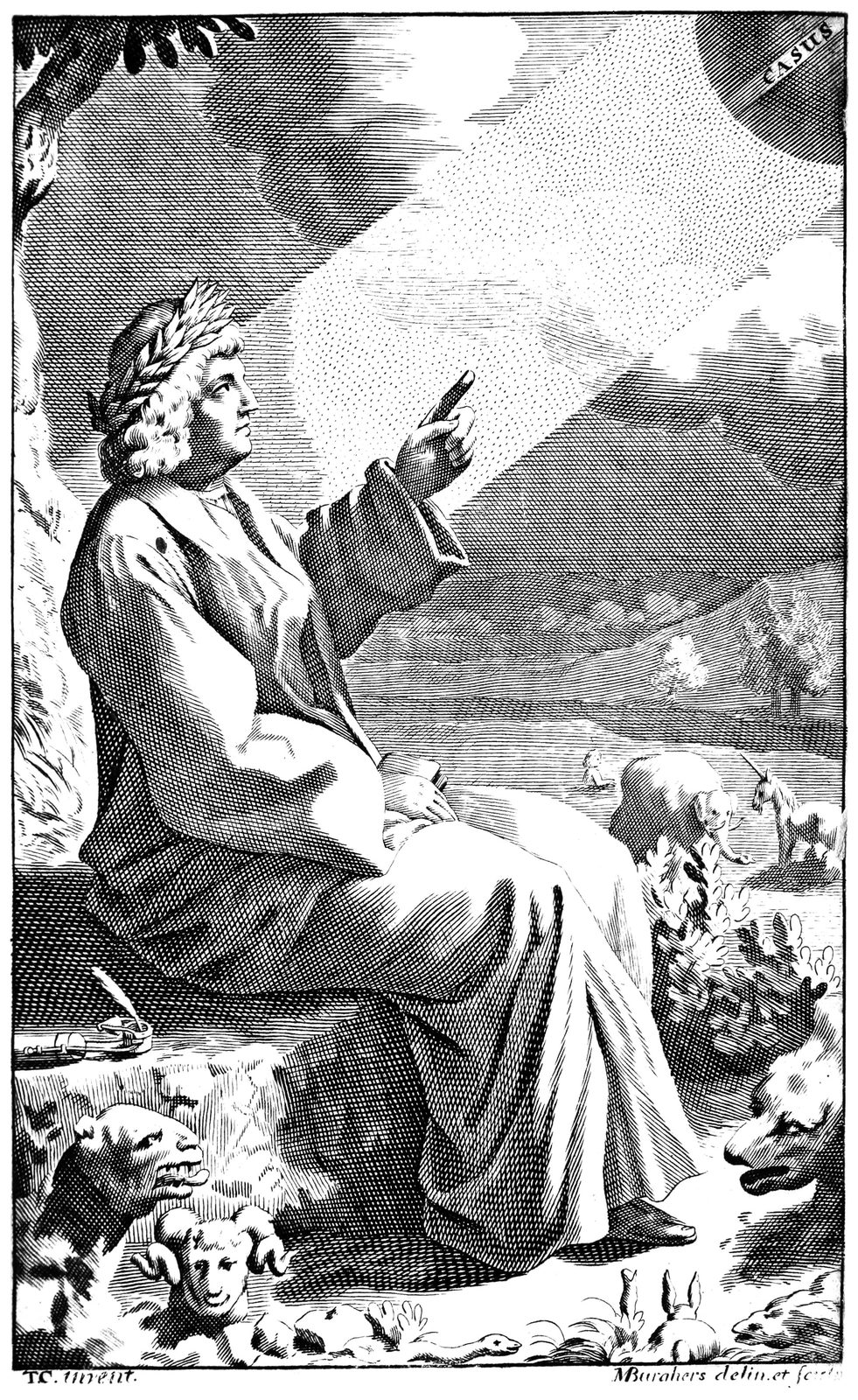
Looking at the night sky calms you rather than scares you. You like knowing how things work, and the thought that you are made of the same stuff as the stars feels like comfort. That is the mood of Lucretius, a Roman poet who put Epicurus's philosophy into one long poem about atoms, so that people could stop being afraid of the gods and of death. Take the free test to see which philosopher you are most like.
Who was Lucretius?
Roman poet who turned Epicurean philosophy into an epic poem, On the Nature of Things. It argues that the world is made of atoms and that we need fear neither the gods nor death.
Clear-eyed materialism as a cure for fear.
What Lucretius believed
- 1
Everything is atoms and empty space
Nothing comes from nothing. The world is made of tiny bodies moving and combining, not by the whims of gods.
- 2
The gods do not run your life
There is no one up there waiting to punish you. Understanding nature removes the fear.
- 3
Death is just the end
After death you will feel nothing, just as you felt nothing before you were born. There is nothing to fear in it.
Signs you think like Lucretius
- Withdrawal. You prefer a quiet, private life.
- Tranquil pleasure. Peace of mind comes first.
- Here and now. You are practical and live in the here and now.
- Equanimity. You stay calm and even.
- Self-made meaning. You make your own meaning.
Lucretius in nine traits
The test measures nine traits. This chart shows where Lucretius sits on each one: the further a point is from the centre, the more the thinking leans toward the word printed there.
In Lucretius's words
“This terror, then, this darkness of the mind, / Not sunrise with its flaring spokes of light, / Nor glittering arrows of morning can disperse, / But only Nature's aspect and her law”
On the Nature of Things, Book I (lines 146-148 of the Latin), tr. William Ellery Leonard
Where to start reading
On the Nature of Things (De Rerum Natura) (before 54 BCE)
Epicurean physics and ethics in six books of verse; our fullest account of ancient atomism.
Cicero, letter to his brother Quintus 2.9 (54 BCE)
The only contemporary mention of Lucretius and his poem.
Philosophers who think like Lucretius
- Epicurus
Simple pleasures, close friends, no needless fear.
- Pyrrho of Elis
Peace through suspending judgment.
- Zhuangzi
Playful freedom and doubt about every fixed view.
Lucretius belongs to the Epicurean school. Are you an Epicurean?
31 situations · about 12 minutes · free result