What is Cynicism?
And are you a Cynic?
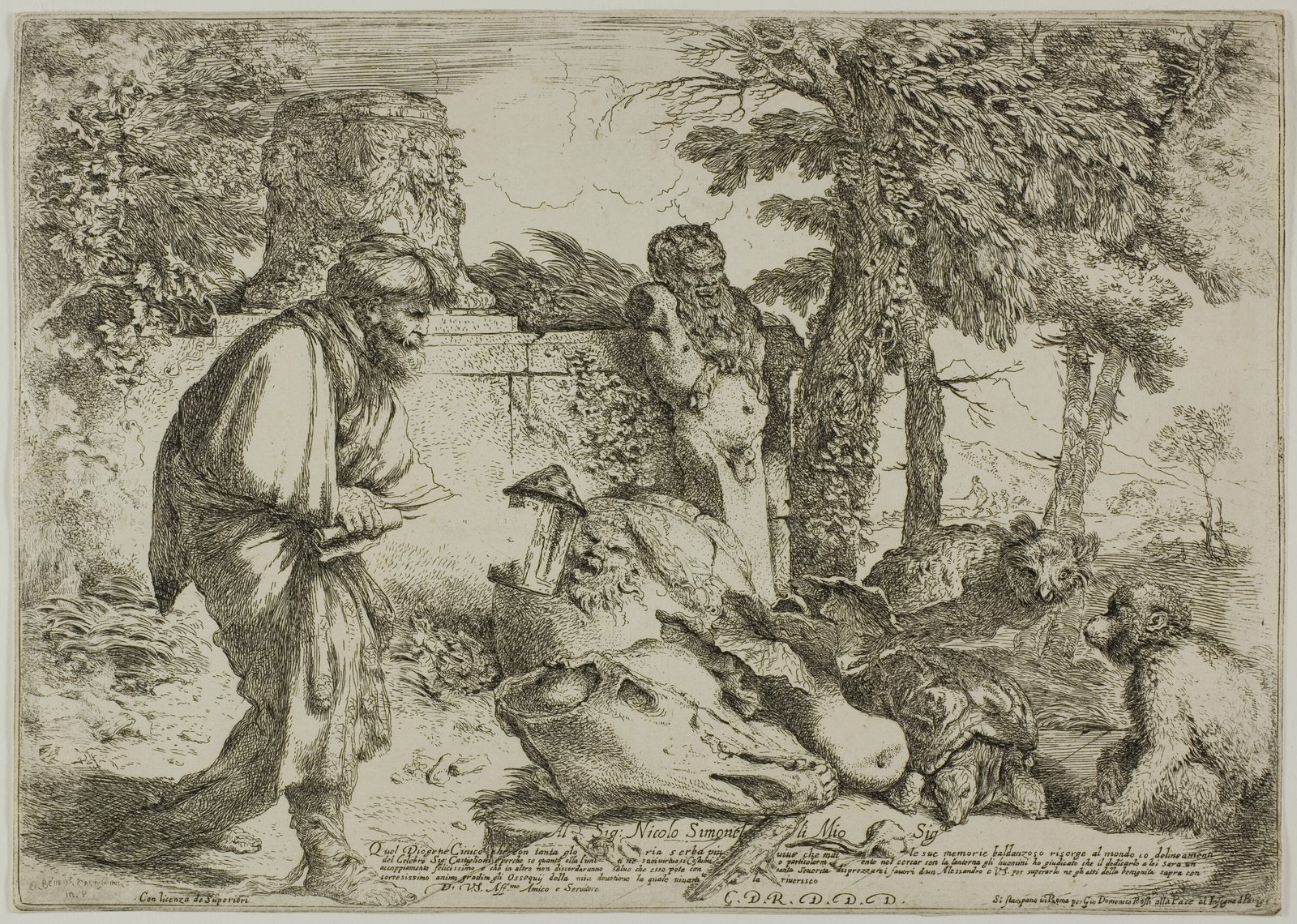
You live by your own rules, need very little, and say what other people only think.
Cynicism was a school in ancient Greece, made famous by Diogenes in the 4th century BC. It has little to do with being "cynical" today. The original Cynics lived simply, ignored status and spoke their minds, in order to be free.
Best-known voices: Diogenes · Crates of Thebes.
Signs you might be a Cynic
- Virtue. Doing the right thing comes first, even when it costs you.
- Nature over custom. Rules must earn your respect; you do things your way.
- Will. You rely on discipline and effort.
The Cynic profile
The test measures nine traits. This chart shows where a typical Cynic sits on each one: the further a point is from the centre, the more they lean toward the word printed there.
Where Cynicism comes from
Cynicism began in Athens in the fourth century BC. Ancient writers named Antisthenes, a companion of Socrates, as its founder, but its real model was Diogenes of Sinope, who arrived in Athens as an exile, reportedly after a scandal over defaced coinage in his home city. He lived in a large storage jar, begged for food and argued that nature, not custom, should guide a human life. People called him kyōn, "the dog", for living shamelessly in public, and the name stuck: "Cynic" means dog-like.
Cynicism had no school building and no curriculum. It passed from person to person by example. Crates of Thebes, a wealthy man, gave away his fortune to live as a Cynic and married Hipparchia, who chose the same life against her family's wishes. Crates in turn taught Zeno of Citium, who founded Stoicism, so the Cynics shaped one of the most influential schools of the ancient world. Under the Roman Empire, wandering Cynics in rough cloaks were a familiar sight, and Epictetus described the ideal Cynic as a messenger sent by Zeus.
Cynicism faded as an organised way of life in late antiquity, and over the centuries the word drifted toward its modern meaning of bitter distrust. Modern thinkers have tried to recover the original. Peter Sloterdijk contrasted ancient and modern cynicism in 1983, and Michel Foucault devoted his final lectures at the Collège de France, in 1984, to Cynic frank speech. Today the Cynics are read for their radical simplicity and honesty.
c. 445–365 BC
Life of Antisthenes, a companion of Socrates whom ancient writers later named the founder of Cynicism.
mid-4th c. BC
Exiled from Sinope, Diogenes settles in Athens, lives in a storage jar and earns the nickname 'the dog'.
c. 325 BC
Crates of Thebes, having given away his wealth, is at his peak as a Cynic, later joined by Hipparchia.
323 BC
Diogenes dies in Corinth; ancient legend says on the same day as Alexander the Great.
c. 300 BC
Zeno of Citium, a student of Crates, founds Stoicism, carrying Cynic ideals into a new school.
3rd c. BC
Menippus of Gadara writes Cynic satires, giving his name to the genre of Menippean satire.
early 2nd c. AD
Arrian's record of Epictetus's Discourses includes 'On Cynicism', portraying the ideal Cynic as a messenger of Zeus.
c. AD 362
Emperor Julian writes orations praising Diogenes while criticising the Cynics of his own day.
1984
Michel Foucault devotes his final Collège de France lectures, The Courage of Truth, to Cynic frank speech.
Key Cynic thinkers
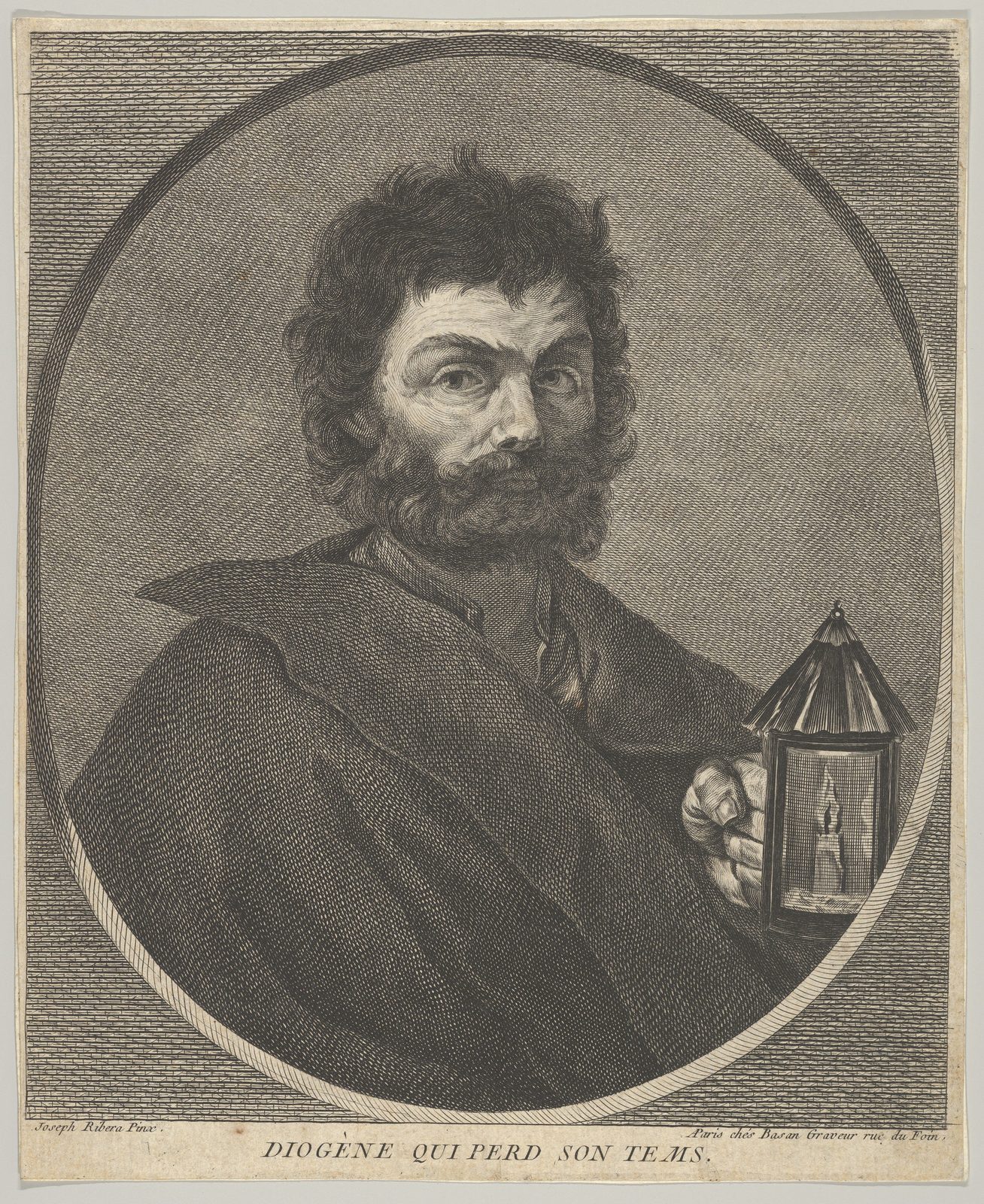
Diogenes of Sinope
The dog in the jar · c. 412–323 BC
Shameless honesty and freedom from status.
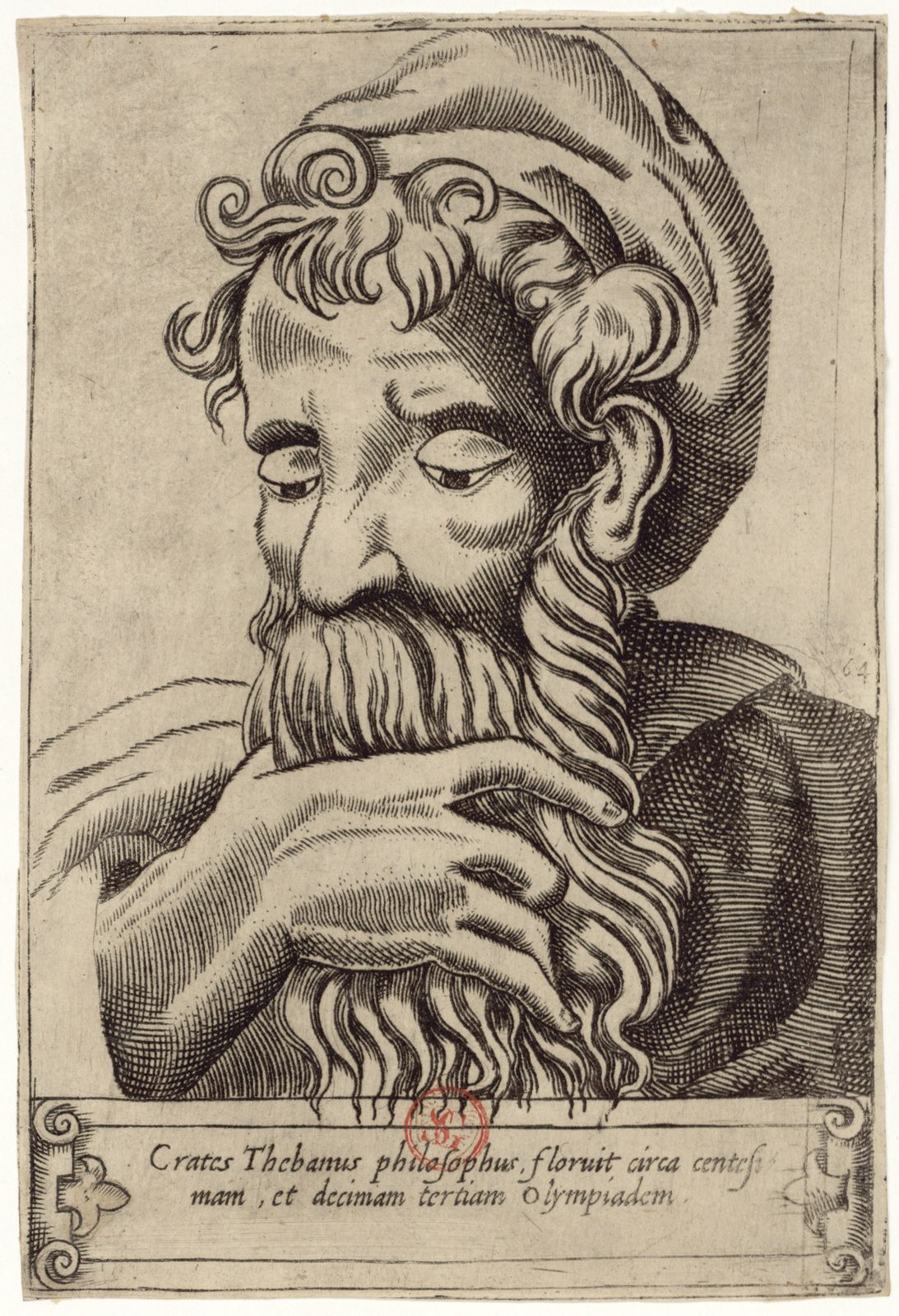
Crates of Thebes
The door-opener of Athens · c. 365–285 BC
Cynic freedom worn lightly, with good humour.
Close to Cynicism
- Existentialism
You refuse to live by a script someone else wrote. You decide who you are.
- Stoicism
You stay steady when life gets hard, and you put your energy only into what you can control.
31 situations · about 12 minutes · free result