Do you think like Epicurus?
The gardener of quiet joys · 341–270 BC · Epicureanism
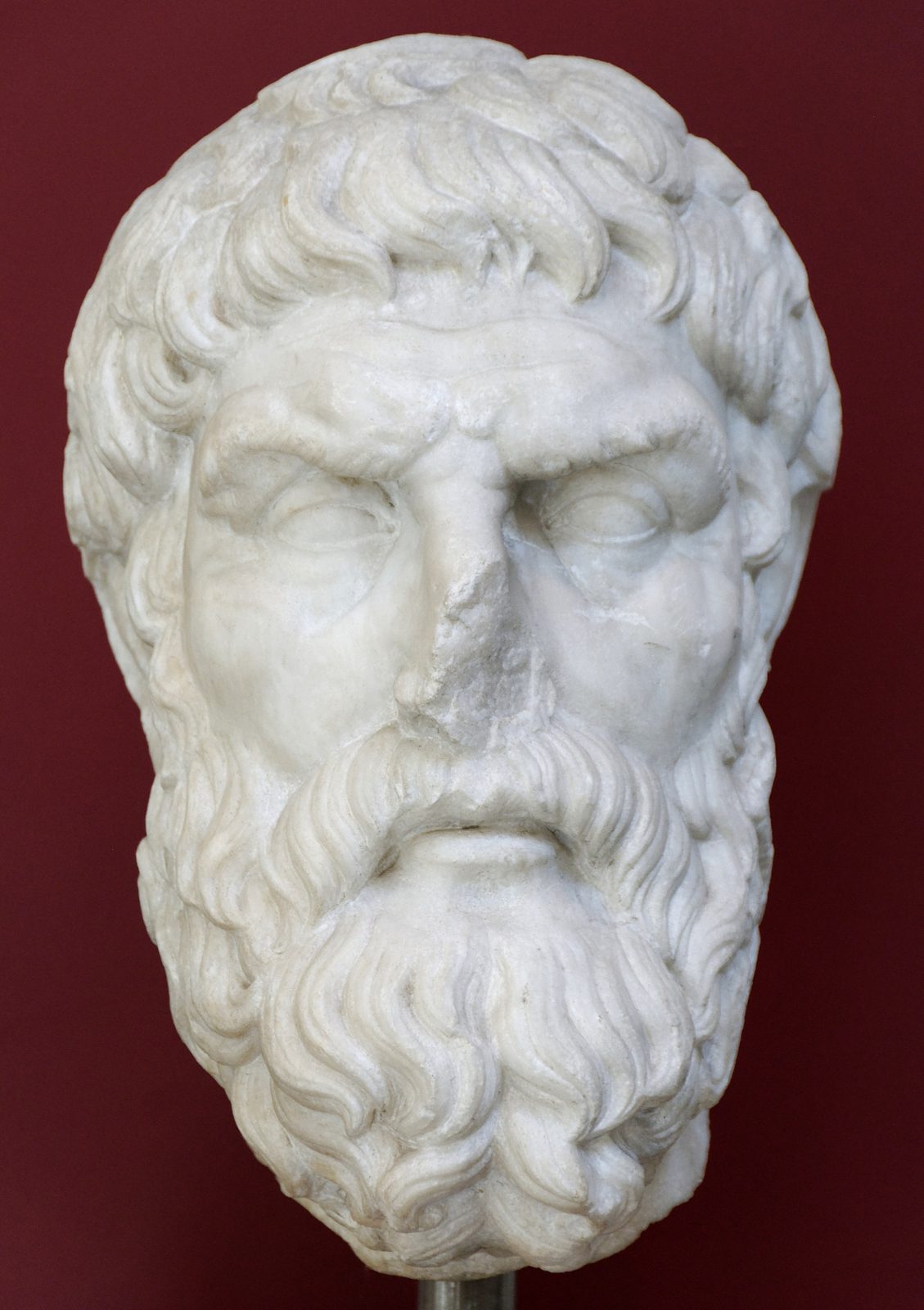
Your idea of a perfect evening is not a big party but a long meal with a few close friends. You would rather have less and worry less. That makes you closer to Epicurus than to any "epicure". In his Garden in Athens he taught that real pleasure is quiet: no pain in the body, no fear in the mind, and good friends at the table. Take the free test to see which philosopher you are most like.
Who was Epicurus?
Founded a community in Athens known simply as the Garden, which welcomed women and slaves at a time when that was unusual. He taught that the highest pleasure is a calm mind among friends.
Simple pleasures, close friends, no needless fear.
What Epicurus believed
- 1
Pleasure means peace
The best pleasure is not excitement but the absence of pain and worry. A calm mind is the goal.
- 2
Want less
Simple desires are easy to satisfy. Bread, water and friends go further than luxury, which only breeds new wants.
- 3
Death is nothing to us
Where death is, we are not. Losing the fear of death frees you to enjoy the life you have.
Signs you think like Epicurus
- Withdrawal. You prefer a quiet, private life.
- Tranquil pleasure. Peace of mind comes first.
- Here and now. You are practical and live in the here and now.
- Equanimity. You stay calm and even.
- Self-made meaning. You make your own meaning.
Epicurus in nine traits
The test measures nine traits. This chart shows where Epicurus sits on each one: the further a point is from the centre, the more the thinking leans toward the word printed there.
In Epicurus's words
“Of all the means which are procured by wisdom to ensure happiness throughout the whole of life, by far the most important is the acquisition of friends.”
Principal Doctrines 27, in Diogenes Laertius, Lives X.148, tr. R. D. Hicks
Where to start reading
Letter to Menoeceus (late 4th or early 3rd century BCE)
A short letter summing up his ethics; preserved in Diogenes Laertius, Lives X.
Principal Doctrines (late 4th or early 3rd century BCE)
Forty short maxims, including his sayings on friendship and death.
On Nature (c. 300 BCE)
His 37-book masterwork, now only charred papyrus fragments from Herculaneum.
Philosophers who think like Epicurus
- Lucretius
Clear-eyed materialism as a cure for fear.
- Pyrrho of Elis
Peace through suspending judgment.
- Michel de Montaigne
Curious, humane doubt, and delight in ordinary life.
Epicurus belongs to the Epicurean school. Are you an Epicurean?
31 situations · about 12 minutes · free result