Do you think like Diogenes of Sinope?
The dog in the jar · c. 412–323 BC · Cynicism
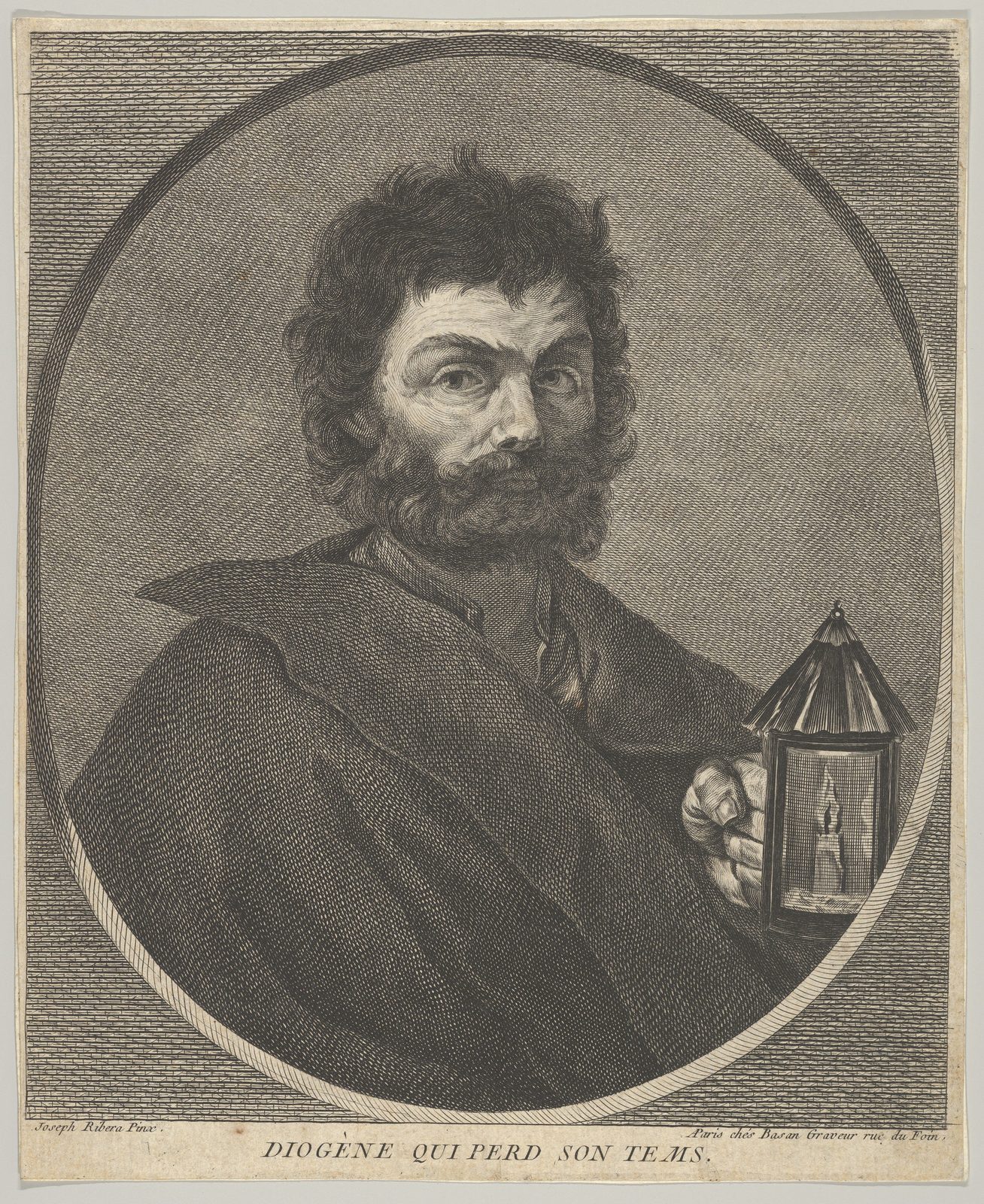
You find most status games ridiculous. You could live out of a backpack, and you say what everyone else is only thinking. Meet Diogenes, who lived in a large clay jar in Athens, threw away his cup when he saw a boy drink from his hands, and told Alexander the Great to stop blocking his sun. He was rude on purpose: to show how little we really need. Take the free test to see which philosopher you are most like.
Who was Diogenes of Sinope?
Lived in a large clay storage jar in the streets of Athens and owned almost nothing. The story goes that he walked through the city in broad daylight with a lit lamp, saying he was looking for a man.
Shameless honesty and freedom from status.
What Diogenes of Sinope believed
- 1
Live by nature
Most of what we own and chase is unnecessary. The less you need, the freer you are.
- 2
Ignore empty custom
Rank, fashion and manners are mostly habit. Test every rule by asking whether it actually makes sense.
- 3
A citizen of the world
Asked where he came from, Diogenes said he was a citizen of the world, not of one city.
Signs you think like Diogenes of Sinope
- Nature over custom. Rules must earn your respect; you do things your way.
- Will. You rely on discipline and effort.
- Virtue. Doing the right thing comes first, even when it costs you.
- Here and now. You are practical and live in the here and now.
- Cosmic order. Life has a bigger pattern or purpose.
Diogenes of Sinope in nine traits
The test measures nine traits. This chart shows where Diogenes of Sinope sits on each one: the further a point is from the centre, the more the thinking leans toward the word printed there.
In Diogenes of Sinope's words
“I am a citizen of the world.”
Diogenes Laertius, Lives VI.63, tr. R. D. Hicks (his answer when asked where he came from)
Where to start reading
Diogenes Laertius, Lives of Eminent Philosophers, Book VI (3rd century CE)
The main collection of his sayings and stories: lively, late and not always reliable.
Epictetus, Discourses 3.22, 'On the Cynic Calling' (c. 108 CE)
A Stoic portrait of Diogenes as an ideal, written centuries after his death.
Dio Chrysostom, Discourses 6 and 8-10 (late 1st century CE)
Speeches built around Diogenes, showing how later writers used him.
Philosophers who think like Diogenes of Sinope
- Crates of Thebes
Cynic freedom worn lightly, with good humour.
- Simone de Beauvoir
Freedom that refuses to stop at yourself.
- Jean-Paul Sartre
Radical freedom, and full responsibility for it.
Diogenes of Sinope belongs to the Cynic school. Are you a Cynic?
31 situations · about 12 minutes · free result